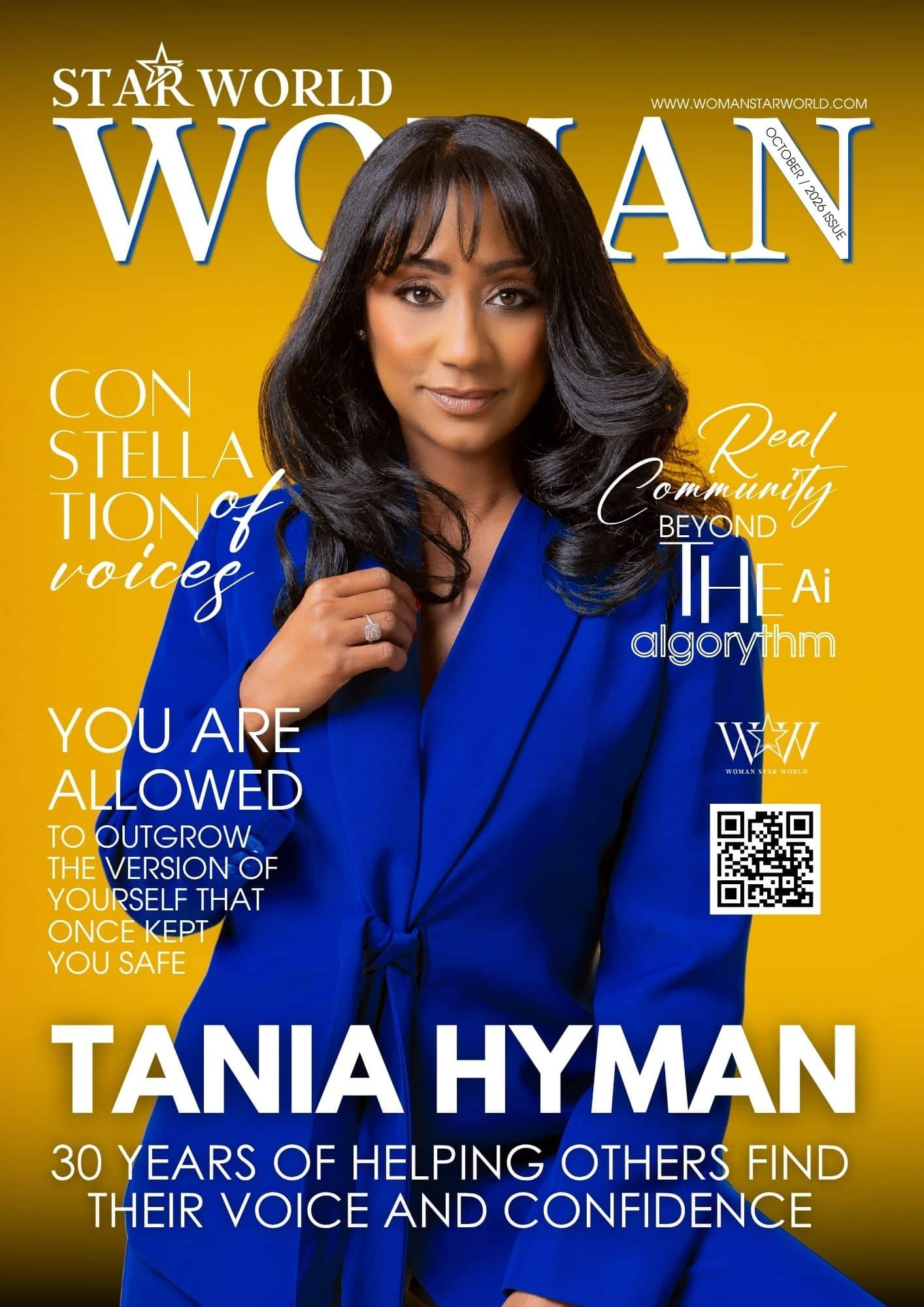
30 YEARS OF HELPING OTHERS FIND THEIR VOICE AND CONFIDENCE
For someone meeting you for the first time, how would you introduce yourself beyond your name and profession? What parts of your life feel most important to mention?
If I were introducing myself beyond my name and profession, I would say that I am a woman who has lived many lives within one lifetime. I am an entrepreneur, educator, author of three books, actress, and event host. For 30 years, I have led my own modeling and personal development academy and agency, while building a career in communication, television, entertainment, and education.
But those titles only tell part of my story. I have been in the public eye since I was very young, and over the years I have experienced success, change, loss, reinvention, and many moments that have forced me to rediscover who I am.
What feels most important to mention is not only what I have achieved, but what those experiences have taught me. I have learned that our value cannot depend solely on our career, appearance, or the recognition we receive from others. Life changes, and we have to be willing to change with it without losing our essence.
I am deeply passionate about communication, education, and helping people recognize their own potential. Teaching has been a major part of my life, and knowing that something I have learned through my own experiences can help another person grow gives my work a much deeper meaning.
I would also describe myself as a woman who continues to evolve. At this stage of my life, I am still learning, creating, studying, writing, and challenging myself. I believe strongly that there is no age limit for beginning again, discovering a new purpose, or becoming a new version of yourself.
So beyond the titles, the career, and the public image, I would simply say: I am a woman who has learned to embrace every chapter of her story and to use what she has lived to inspire others to embrace theirs.
What does your life look like at this stage — what do you do, where does most of your energy go, and what occupies your mind these days?
At this stage of my life, I would describe myself as being in a period of professional expansion, but also personal selection.
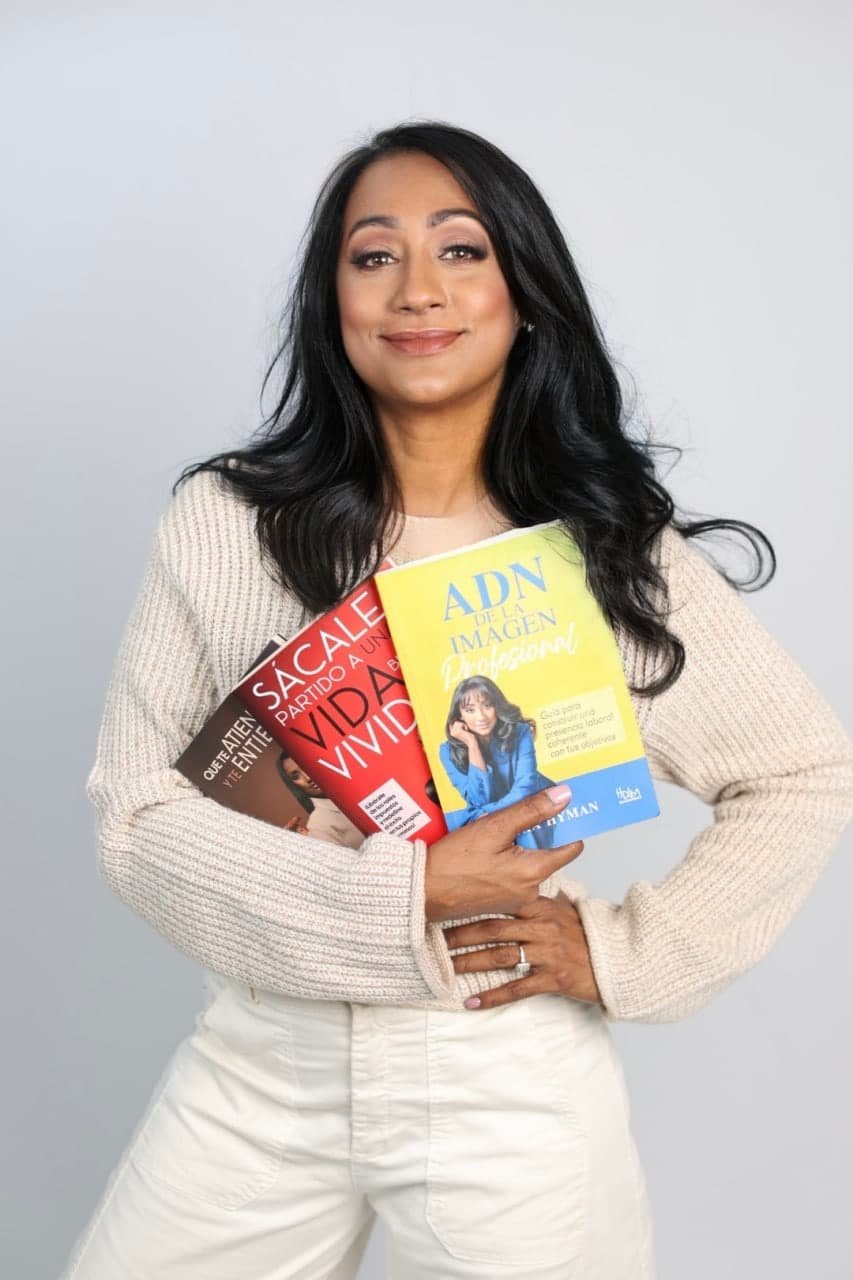
Professionally, I am very active. I currently lead my company, Tania Hyman Agency, where I work with individuals and corporations in the areas of professional image and communication. I conduct corporate training programs, speak at conferences both nationally and internationally, and I am currently promoting my third book, ADN de la imagen profesional, which focuses on the principles and unwritten rules of professional image in today’s workplace, both in person and online.
A great deal of my energy goes into communicating and teaching, but also into continuing to learn. I have always believed that the brain is like a muscle: if you want it to stay strong, you have to exercise it. After many years away from university as a student, I decided to go back, and I am currently pursuing a master’s degree in University Teaching. Being a student again at this stage of my life has been both challenging and incredibly rewarding.
And then there is my family. Whatever time I have left, I try to dedicate to what truly matters. After my parents passed away, I became responsible for the care of my brother, who has a disability. That responsibility is an important part of my life and has also taught me a great deal about love, patience, presence, and priorities.
As for what occupies my mind these days, I think a lot about purpose, legacy, and balance. I still have dreams. I still want to grow, create, travel, teach, write, and challenge myself. But I have become much more selective about what deserves my time and energy.
For many years, life was about achieving, producing, and constantly moving forward. Today, I still want to accomplish things, but I also want to enjoy what I have worked so hard to build. I want to be present for the people I love, continue learning, protect my peace, and make sure that whatever I do has meaning. So perhaps this chapter of my life is not about doing more. It is about choosing better.
What part of your background or personal story has shaped the woman you are today more than anything else?
If I had to choose one experience, I would say the pandemic changed me more than anything else. The word I associate most with that period of my life is reinvention.
I have often said that if the pandemic didn’t teach us to change, very little will. In my case, change was not optional. While we were in lockdown, the space where I had built my business was severely damaged by a flood. I found myself unable to work for almost a year, while at the same time caring for my mother, who was ill. Suddenly, the life and routine I had known for so many years were no longer there.
That period forced me to ask myself a very important question: What can I do with everything I already have within me?
I had decades of experience, knowledge, studies, and talents, but I needed to find new ways to use them. I had to become creative and redirect all of that into something new. And that is when something remarkable happened: I finally wrote my first book. It was a project I had been postponing for almost ten years, and once I made the decision to do it, I finished it in just two weeks.
Looking back, I realize that what seemed like a period when everything had stopped actually became the beginning of a completely new chapter in my life. That first book opened the door to another side of me, the author and today I have written three books.
The pandemic taught me that reinvention does not mean becoming someone else. Sometimes it means looking at everything you already are and discovering a different way to use it.
That experience changed the way I respond to uncertainty. Today, when life changes the plan, my first thought is no longer simply, “What am I going to do now?” It is also, “What can I create from here?”
I think that is one of the greatest lessons I carry with me today: circumstances can change what you do, but they do not have to take away who you are.
Is there a chapter of your life that people rarely know about, yet you feel explains a great deal about who you became?
There is a more private chapter of my life that began during the pandemic, when I started exploring my spirituality in a much deeper way.
I began studying the Bible, something I have continued doing for the past six years. But for me, this journey has never been so much about religion as it has been about spirituality — about looking inward, questioning myself, and trying to become more conscious of the way I relate to others and to life itself.
One of the most difficult lessons has been forgiveness. I have learned that forgiving is not about pretending that something did not hurt or excusing what someone did. For me, it has been about learning to let go of what I no longer want to carry.
It has also taught me to make the effort to put myself in someone else’s place before reacting. And then there is another lesson that I am still working on: learning not to judge. I would never say I have mastered that. I am human, and it is still an exercise for me.
I think this part of my life explains a great deal about the woman I am becoming. My spirituality has not made me feel that I have all the answers. If anything, it has made me ask better questions, look at myself more honestly, and understand that personal growth is a lifelong process.
Today, I am much more interested in inner peace than in being right about everything.
What would you most like readers of Woman Star World to know about you after reading your story?
I would like readers to know that the woman they see today is not the result of a perfect life or a perfectly planned journey. I have had successes, but I have also had disappointments, losses, unexpected changes, moments of uncertainty, and times when I have had to begin again.
I am still a work in progress. I am still learning, still questioning myself, still making mistakes, still dreaming, and still discovering new versions of who I can be.
There is a famous saying, “Age is nothing but a number,” and the older I get, the more I understand how true that can be. Sometimes we spend too much time worrying about how many years we have lived instead of asking ourselves what we are going to do with the years we have.
At 58, I am back at university pursuing a master’s degree. I am writing books, developing new projects, traveling, speaking, teaching, and still setting new goals for myself. I don’t believe that getting older should mean becoming smaller, dreaming less, or assuming that our most exciting chapters are behind us.
At the same time, I have learned that growth is not always about doing more. Sometimes it is about choosing better, letting go of what no longer serves you, protecting your peace, and being present for what truly matters.
I do not want my story to say, “Look at everything I have accomplished.” I would rather it say, “Look at everything that is still possible.”
If one woman closes this magazine thinking less about the number attached to her age and more about what she wants to do with the years ahead of her, then sharing my story was worth it.
What are you most deeply invested in at the moment — professionally, personally, creatively or emotionally?
At this moment, I am deeply invested in growth but growth has a very different meaning to me today than it did years ago.
Professionally and creatively, I am very focused on this new chapter as an author. Writing has given me another way to communicate everything I have learned through decades of working with people, teaching, and observing human behavior. I am also deeply invested in education, not only as someone who teaches, but as someone who continues to learn. Going back to university for my master’s degree has reminded me how important it is to remain curious and intellectually active at every stage of life.
Personally and emotionally, however, I am investing more in myself. I am learning to be more selective with my time, my relationships, and my energy. For many years, I was very good at being productive, responsible, and available to everyone. Now I am also learning the importance of being available to myself.
I want to continue growing professionally without sacrificing the parts of life that make that success meaningful. I want time for my family, for my spirituality, for the people I love, and also simply for myself.
So if I had to put it into one sentence, I would say that right now I am deeply invested in becoming a more complete woman, not simply a more accomplished one.
Was there a turning point that changed the direction of your life or made you reconsider what you wanted from it?
Yes. Without question, one of the greatest turning points in my life was losing my mother.
She was not only my mother; she was my best friend and also an essential part of my business. We complemented each other perfectly. I was the creative side the image, the public relations, the teaching, the face of the company while she was the numbers. She handled the accounting, the administration, and many of the practical details that kept everything running.
And I made a mistake: I never really learned her side of the business. I think somewhere in my mind, I simply assumed she would always be there.
When she passed away, I was grieving my mother and my best friend, but at the same time I suddenly had to understand a part of my own company that was completely unfamiliar to me. I felt as though I had been dropped into the middle of a maze without a map.
It happened during an already difficult chapter. My business had been severely affected, the physical space had to be rebuilt, there were debts to deal with, and I had to learn everything from managing money to understanding the administrative and government requirements involved in running a company. At that point, it was no longer enough to be the creative person or the face of the business. I had to learn how to truly run it.
It was humbling. After so many years as an entrepreneur, I found myself becoming a beginner in my own company.
Losing my mother changed me personally, of course, but it also changed the way I understand independence and responsibility. I learned that being good at what you do is not the same as understanding the business behind what you do.
I am still learning that side of entrepreneurship today. And perhaps that is one of the biggest changes her absence brought into my life: it forced me to step into a role I had never prepared myself for and discover that, even when life makes you start over in an area you thought you already knew, you can still learn.
What have you built, created, achieved or protected in your life that carries the greatest personal meaning for you — and why?
Of everything I have built throughout my life, perhaps what carries the greatest personal meaning for me is my name — not in terms of fame, but in terms of credibility.
I have spent most of my adult life in the public eye. My career has taken me through modeling, television, acting, entrepreneurship, teaching, public speaking, and now writing. The roles have changed, the stages have changed, and I have changed. But through all of those chapters, one thing has followed me everywhere: my name.
I have learned that a reputation is built very slowly and can be damaged very quickly. For me, protecting my name has meant trying to be consistent between what I say, what I teach, and how I conduct myself professionally and personally. It does not mean being perfect — I certainly am not, but it does mean being accountable for the choices I make.
I am also proud that the company I created 30 years ago still carries my name and continues to represent my work and values. Thousands of people have passed through my classrooms, training programs, and conferences over the years, and knowing that I may have contributed something meaningful to their lives gives that journey a purpose beyond professional success.
Companies can change. Careers evolve. Titles come and go. But your name follows you everywhere.
So when I think about what I have built and protected most carefully, it is that: the trust and credibility attached to my name. That is something no award, title, or professional achievement could ever replace.
What does your work give you beyond income or professional recognition? What keeps you connected to it?
Beyond income or recognition, my work gives me a sense of purpose. I have always believed that if you are going to dedicate such a large part of your life to your work, there has to be passion behind it. For me, passion is what keeps the work alive.
But I have also learned something important over the years: passion can change. There have been things in my life that I started with enormous enthusiasm and eventually chose to leave behind when I realized that the passion was no longer there.
Beauty pageants are a good example. For many years, I loved that world because it gave me the opportunity to provide young women with a platform, help them develop their communication and presentation skills, and watch them grow. Some of the young women I worked with eventually became public figures, and that was incredibly rewarding. But over time, I also experienced a side of that environment that no longer brought me the same joy or peace. And I learned that it is okay to recognize when a chapter has served its purpose and let it go.
Today, what keeps me connected to my work is the human impact. It is seeing someone become more confident, communicate more effectively, discover something about herself, or come back years later and tell me that something I taught her made a difference. The same happens when someone reads one of my books and tells me, “I needed to read this.”
Those moments remind me why I continue doing what I do.
At this stage of my life, passion is still essential, but so is peace. I no longer believe that success requires holding on to everything you once loved. Sometimes success is also knowing when to stay, when to evolve, and when to let go.
Has your definition of success changed with age and experience? What does a successful life mean to you now?
Absolutely. My definition of success has changed tremendously with age and experience.
When I was younger, success was much easier to measure. It was about achieving goals, building a career, being recognized for my work, creating a successful company, and always moving toward the next accomplishment. And I am grateful for all of those things because they helped build the life I have today.
But experience teaches you that achievement and fulfillment are not necessarily the same thing.
Today, I still have ambitions. I still set goals, create projects, study, write, travel, and challenge myself professionally. I don’t believe we have to stop wanting more from life simply because we get older. But those accomplishments are no longer the only way I measure whether my life is successful.
Success today is having choices. It is being able to decide what deserves my time and what does not. It is doing work that still excites me, continuing to learn, being present for my family, protecting my peace, nurturing my spirituality, and having the courage to walk away from things that no longer feel right for me.
I also think success is being able to look at your life honestly — including the mistakes, the losses, and the chapters that did not go according to plan — and still feel grateful for the person you have become.
At this stage of my life, I am less interested in proving that I am successful and much more interested in actually feeling that my life is meaningful.
For me, a successful life is not a perfect life. It is a life that feels like your own.
Which values have become non-negotiable for you, both in the people you choose around you and in the decisions you make?
I have quite a few non-negotiables today, but loyalty, honesty, empathy, and accountability are probably at the top of the list.
I learned the importance of those values during some of the most difficult years of my life. I have a saying that I use often: “When the ship is sinking, you discover there are very few life preservers.” Difficult moments have a way of showing you who people really are — and also who you are in their lives.
By 2024, I realized that I needed to “clean house,” as we say in Panama. I made the difficult decision to end some relationships with people I had known for more than 30 years. That was not easy. History creates attachment, and sometimes we hold on to relationships simply because they have been part of our lives for so long.
But I learned that longevity does not necessarily mean loyalty.
Today, I pay much more attention to how people show up, particularly when life is uncomfortable. I value people who are honest even when the truth is difficult, who can put themselves in someone else’s position, and who are capable of saying, “I was wrong.” I think the ability to take responsibility for our actions says a great deal about our character.
And I try to hold myself to those same standards. Non-negotiables cannot simply be a list of qualities we demand from other people; they also have to be values we are willing to practice ourselves.
I no longer believe that knowing someone for a long time automatically earns them a permanent place in my life. I can appreciate the history we shared and still recognize when a relationship no longer belongs in my present.
At this stage of my life, I would rather have a smaller circle built on honesty, loyalty, empathy, and mutual respect than a large one built simply on history.
What have you had to unlearn about being a woman, about success, relationships or life itself?
One of the biggest things I have had to unlearn is the idea that being a strong woman means doing everything on your own.
For many years, I thought strength meant being able to handle everything, solve everything, and keep going no matter what. With time, I have learned that real strength also means knowing when to delegate, when to ask for help, and how to recognize what is truly important, what can wait, and what does not require my personal attention.
I have also had to unlearn the idea that strength and vulnerability cannot coexist. A strong woman has the right to fall apart sometimes. She has the right to say, “I can’t do this today.” She has the right to be tired, to cry, to ask for support, and to not always have the answer.
Being vulnerable does not cancel out your strength. It is part of being human.
Today, I believe strength is not about carrying everything. It is about knowing what is yours to carry, what you can share, and what you can finally put down.
When life becomes difficult, what part of your character tends to carry you through — and where do you think that quality came from?
I think the part of my character that carries me through difficult moments is my ability to eventually find calm in the middle of chaos.
I wasn’t necessarily born with that quality. I think the woman I am today is the result of many setbacks, failures, mistakes, and moments when life simply knocked me down. Every one of those experiences taught me something about how I react when things don’t go according to plan.
But I also believe my character is a combination of two very different people: my mother and my father. My mother was very logical, measured, and calm. She would stop, think, and then respond. My father was much more expressive, spontaneous, and sometimes chaotic in the way he reacted to situations.
By nature, I probably inherited more of my father’s temperament. But with maturity, I learned to appreciate and develop more of my mother’s ability to pause.
That doesn’t mean I never react emotionally — I do. But I have learned that not everything requires an immediate response and that sometimes the best thing you can do in the middle of chaos is give yourself enough time to see the situation clearly.
So perhaps what carries me through is not that I am naturally calm or endlessly resilient. It is that life has taught me how to recover my center. I may stumble, I may react, I may even fall apart for a moment — but eventually, I find my footing and ask myself, “All right, what do I do from here?”
Is there something you feel called to contribute, change, create or leave behind? What would you like your presence in this life to mean to other people?
If you had asked me this question a few years ago, I probably would have answered immediately: I want to write a book. I have always believed that one of the most powerful ways to leave a legacy is through writing.
Today, having written three books, I understand even more why that mattered so much to me. Books do more than share knowledge. The right words at the right moment can challenge the way someone thinks, help them see themselves differently, or even change the direction of their life.
My books reflect many of the lessons that have shaped me. I have written about communication and the importance of setting boundaries; about resilience, self-love, spirituality, and learning to be intentional about the people we allow into our lives; and, most recently, about professional image and the reality that long before we open our mouths, we are already communicating something about ourselves.
But when I think about legacy, I also think about my students. I have been teaching for more than 30 years. Some of the girls who first came to me when they were seven or eight years old are now women in their forties. To see them as adults, building their own lives, and to know that perhaps something they learned in my classroom stayed with them is incredibly meaningful to me.
So I think my legacy lives in two places: in the words I have written and in the people I have taught.
My books will remain when I am no longer here, and hopefully some of the lessons I have shared will continue through the lives of my students as well. I don’t need people simply to remember that Tania Hyman existed. I would much rather know that something I taught, wrote, or shared helped someone communicate better, value herself more, set a necessary boundary, begin again, or simply see life from a different perspective.
That, to me, would be a life well lived.
If this article captured one sentence that truly represents you at this moment in your life, what would you want that sentence to say?
“At this stage of my life, I am not counting the years behind me; I am much more interested in what I am going to do with the years ahead.”
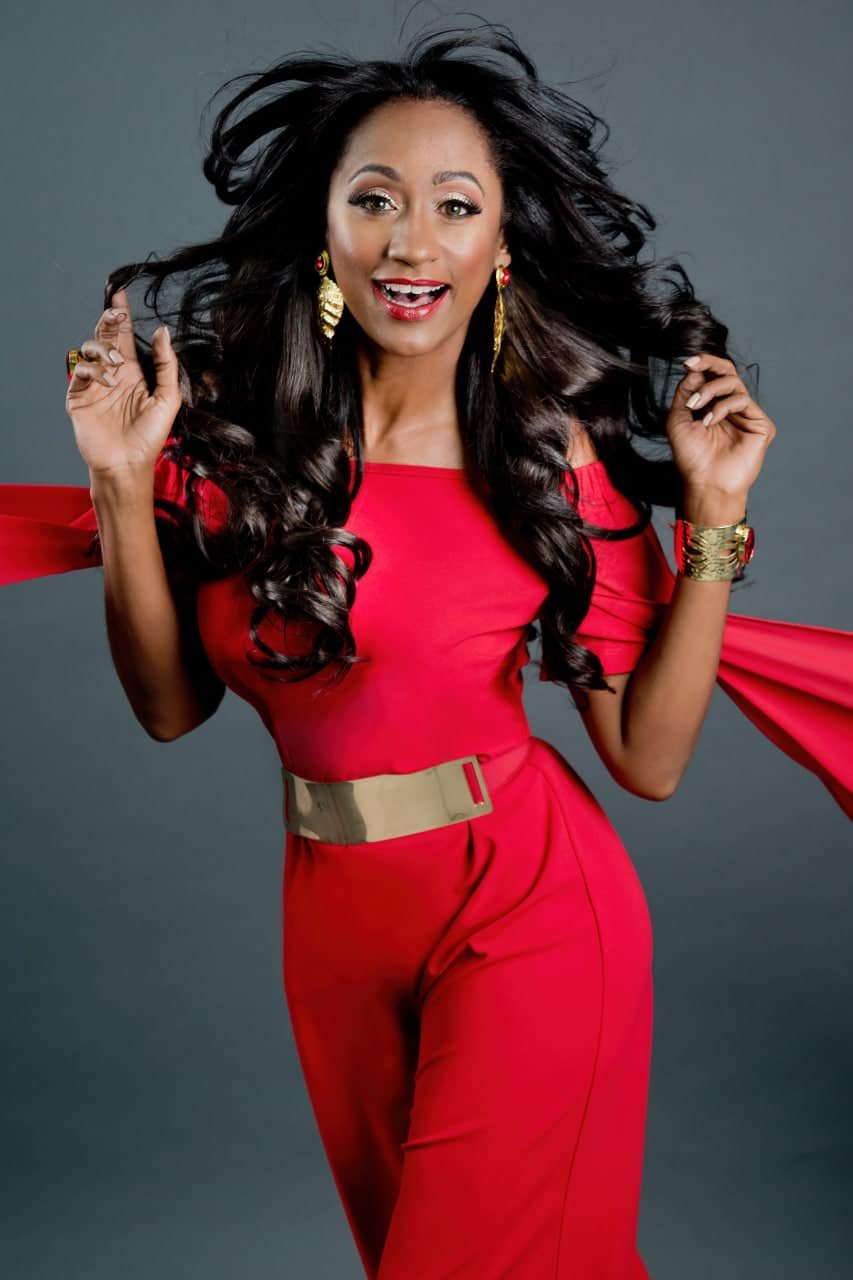
Photo by Janin Gaston
YOU CAN MEET TANIA HERE